

Stop judging your long runs by how wrecked you feel afterward.
Exhaustion tells you a session was demanding. It does not tell you whether you fueled it well. Give food timing, hydration and the habits around training the same attention as your miles.
Three steps to support long sessions: the first two cover fueling and strength. The third tackles the recovery habit you keep meaning to do, with a simple way to make it stick.
01 · Fuel your training
Eat enough. Time it so your stomach can keep up.
Food across the day matters, not just the snack before you start. Carbohydrates help power long efforts. Water helps you stay hydrated and cool down. Electrolytes are minerals your body uses every day. Sodium helps your body hold on to water. Potassium and magnesium help muscles contract and relax. Include water and electrolytes in your hydration plan, alongside the food that fuels your effort.
Practice a main meal 2–4 hours before training. If you need a top-up closer to the start, try a small, familiar carbohydrate snack about an hour before. Adjust the timing and portions to what you digest comfortably.

Before: start hydrated.
Sip water or an electrolyte drink before you start. Pair it with familiar carbohydrate food. Electrolytes support hydration; the food supplies fuel.
During: replace what you lose.
Keep water and electrolytes accessible, with a refill plan for longer sessions. Sodium helps replace sweat losses. Practice amounts that suit your duration, weather and stomach.
After: rehydrate and refuel.
Have your recovery meal and drink ready. Replace fluids and get electrolytes from food or a drink as part of recovering from the session.
Find a food-and-drink routine you enjoy and tolerate well. Practice it before a demanding day.
02 · Build strength consistently
Build strength. Practice control as you turn.
Running includes coordinated movement of your trunk and pelvis as you shift from one leg to the other. Keep squats and hinges, and add controlled rotation alongside your other strength work. Creatine helps muscles quickly replace energy during hard, short efforts, including strength training.
Choose strength work you can repeat around your endurance sessions. Use manageable loads and smooth movement before adding speed or resistance.
Goblet squat
Hold one weight at your chest. Sit between your hips, then drive through your feet to stand.
Kettlebell hip hinge
Soften knees. Send hips back, then stand tall.
Dead bug core control
Lie on your back. Brace gently and reach an opposite arm and leg away; return and switch sides.
Standing band rotation
Use a light band. Turn comfortably through your feet and hips, then return slowly. Practice both directions.
Movement examples, not an individualized program. Choose suitable loads and progress gradually.

Where creatine fitsTap to read more
For many healthy adults, 3–5 g of creatine monohydrate daily is a common maintenance dose. Count the creatine in any blended drink toward your daily total if you use another creatine product.
The strongest evidence is for short, intense efforts and strength training. A review of 13 studies found no overall endurance-performance benefit. Creatine can also increase body weight, including water inside muscle. Try changes during training and assess how they suit you.
Study links are collected in the research section at the end.
03 · Make body care a habit
You know you mean to roll out. Give it a cue.
Knowing what to do and repeating it are different challenges. Keep your massage ball where you take off your training shoes. Let shoes off be the cue for a short body-care break, before you settle onto the couch.
Start small: 30–60 seconds of comfortable pressure on one glute, then switch sides. Support your weight with your hands, breathe easily and move around afterward. A short practice gives you something manageable to repeat.
Sit with the ball under one glute, away from bone. Keep knees bent and support your weight with your hands. Make small, slow shifts and breathe easily.
Use comfortable pressure on muscle. Avoid spine, joints and injured areas. Stop for sharp pain, numbness or tingling.

A simple recovery checklistTap to read more
Have a familiar meal ready, such as rice, chicken or tofu, and vegetables. Spread protein across meals. Aim for 7–9 hours of sleep as a starting point and adjust for your needs.
Ball massage may temporarily improve movement or reduce how sore you feel. Keep it gentle and follow it with comfortable movement. Persistent pain or unusual fatigue deserves individual advice.
Consistency is the game. Give it an anchor.
Before training: use getting dressed as your cue to prepare familiar food and a drink you enjoy. After training: shoes off, then a short body-care break.
Repeat that same sequence. Link daily creatine to breakfast or another habit you already keep, including on rest days. A routine you look forward to is easier to come back to.

Put the routine into practice
Meet REDSALT Elite.
Make the ritual something you look forward to. REDSALT Elite brings electrolytes and daily creatine together in a refreshing Hawaiian Watermelon drink, with tyrosine and taurine.
Each serving brings 5 g creatine together with electrolytes, including 1,000 mg sodium. Zero sugar, caffeine or sucralose.
Mix your daily serving, pair it with the food your session calls for and make it part of your pre-training ritual. On rest days, keep the daily habit with a meal. One drink brings together several of the ingredients we discussed.
Your first three bag membership adds the massage ball, guided lessons and premium glass shaker. Keep the ball by your shoes and follow the guided lesson. You have the tool, the instruction and a clear place for it in your day.
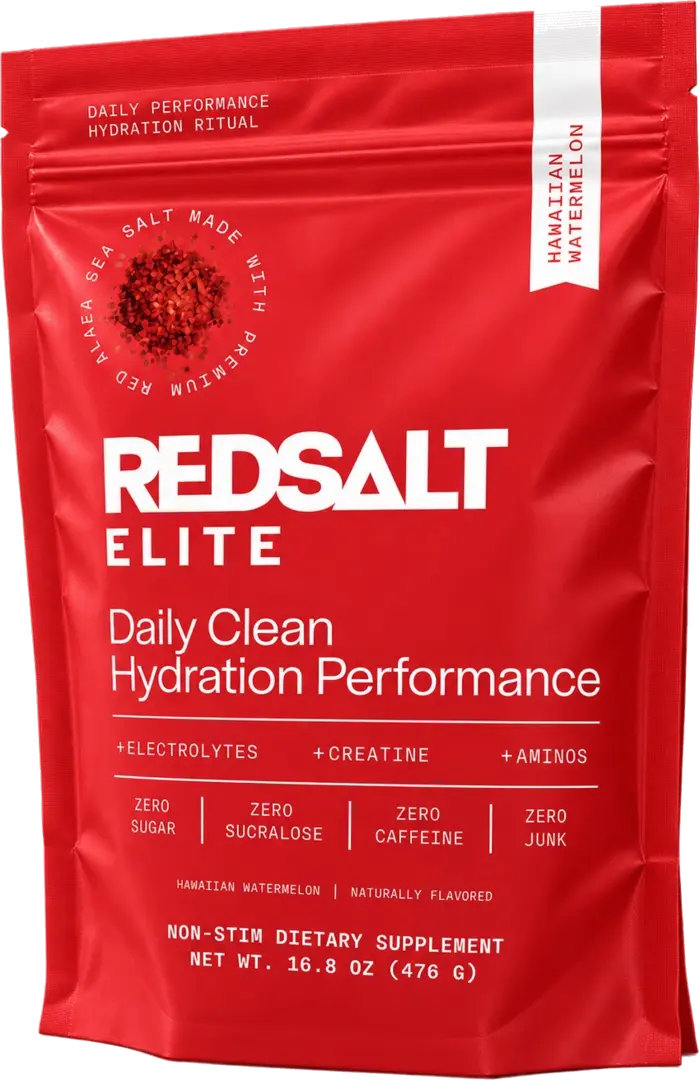 The daily drinkThree bags, 84 servings
 Massage ball + lessonsFree with your first membership delivery
 Glass shakerFree with your first three bag delivery
3 bags · $123 per delivery
At the 12 week schedule. Recurring membership until changed or canceled.
Explore the REDSALT membership →30-day money-back guarantee
First eligible membership order. Use consistently for at least 14 days and contact us within 30 days of delivery. Return conditions apply.
What else is in the drink?Tap to read more
Each serving contains 1,000 mg sodium, 400 mg potassium, 150 mg magnesium and 5 g creatine monohydrate, plus tyrosine and taurine. Zero sugar, caffeine or sucralose. Follow the product’s mixing and serving directions.
Use your separate race-fueling plan for long sessions. Count the creatine in your daily total rather than repeatedly using this drink to meet every on-course sodium need.
Research behind this guideTap to read more
- Sports Dietitians Australia: meal timing and digestion
- Trunk and pelvis coordination during running
- Strength training and running economy review
- ISSN: nutrition for ultra-marathon training and racing
- ISSN: creatine safety and use
- Creatine and endurance performance review
- Rolling, performance and recovery review
- NIH: how much sleep adults need
Ingredient research is not a clinical trial of REDSALT Elite or its massage ball. Food, fluid and supplement needs vary by person, event and conditions.
By Jacob Gise. REDSALT brand education. General information, not an individual training or medical plan. Check suitability with a qualified professional if you have a medical condition, take medication or have been advised to limit sodium or supplements.